
Here are things not to say in an interview. By avoiding these phrases and using alternatives that showcase your professionalism, interest, and skills, you’ll leave a strong and positive impression on your interviewers.

Further Details:
1. Don’t say: “I don’t know.”
- Why to Avoid: Saying “I don’t know” without any follow-up can make you appear unprepared or uninformed.
- What to Say Instead:
- “I’m not familiar with that, but I’m eager to learn more about it.”
- “I’m not sure at the moment, but I’d be happy to research and get back to you.”
- Reason: This shows that you’re proactive and open to learning, which is a valuable trait in any candidate.
2. Don’t say: “I hate my current/previous job.”
- Why to Avoid: Speaking negatively about a current or past employer makes you seem unprofessional and may raise concerns about your attitude.
- What to Say Instead:
- “I’m looking for new challenges and opportunities to grow professionally.”
- “I’m seeking a position that better aligns with my long-term career goals and skills.”
- Reason: This demonstrates your positive attitude, focus on growth, and professional goals.
3. Don’t say: “I’m just here for the paycheck.”
- Why to Avoid: This suggests that you’re only motivated by money and don’t have a genuine interest in the company or the role.
- What to Say Instead:
- “I’m excited about the opportunity to contribute to your team and to grow professionally.”
- “I’m looking for a role where I can apply my skills and make a meaningful impact.”
- Reason: This demonstrates that you are motivated by both career growth and contributing value to the company.
4. Don’t say: “I’m not a team player.”
- Why to Avoid: Employers seek candidates who are collaborative and can work well with others.
- What to Say Instead:
- “I work well in teams, and I believe that collaboration is key to achieving success.”
- “While I enjoy working independently, I also thrive in team environments where we can share ideas and support each other.”
- Reason: This shows you are flexible and adaptable in different work settings.
5. Don’t say: “I don’t have any weaknesses.”
- Why to Avoid: This can come off as insincere or lacking self-awareness. No one is perfect, and employers appreciate honesty.
- What to Say Instead:
- “One area I’ve been working on is improving my time management, and I’ve been using tools like calendars and task management software to better organize my work.”
- “I sometimes find it challenging to delegate tasks, but I’m learning how to trust my team and assign responsibilities more effectively.”
- Reason: Acknowledging areas for improvement and demonstrating how you’re working on them shows self-awareness and a commitment to professional growth.
6. Don’t say: “I’m just looking for a job, any job.”
- Why to Avoid: This makes you appear unfocused or uninterested in the specific role and company.
- What to Say Instead:
- “I’m particularly interested in this role because it aligns with my background in [specific skill or experience], and I’m excited about the potential to contribute to your team.”
- “I’ve researched your company, and I admire your commitment to [specific value or mission]. I’m eager to be part of a team that shares those values.”
- Reason: This demonstrates that you have a genuine interest in the company and the role, and you’ve thought carefully about why it’s a good fit for you.
7. Don’t say: “I’m not sure what you mean.” (If it’s avoidable)
- Why to Avoid: This can make you appear unprepared or unsure of your understanding of the job requirements.
- What to Say Instead:
- “Could you please clarify that for me? I just want to make sure I fully understand.”
- “I believe I understand what you’re asking, but I’d appreciate it if you could provide a bit more context to ensure I’m on the right track.”
- Reason: Asking for clarification shows that you are attentive, detail-oriented, and eager to understand the requirements thoroughly.
8. Don’t say: “I don’t have any questions.”
- Why to Avoid: It may seem like you’re not genuinely interested in the company or the role.
- What to Say Instead:
- “I’d love to know more about the company’s culture and how the team collaborates on projects.”
- “What does success look like for someone in this role during the first six months?”
- “How do you see the company evolving over the next few years?”
- Reason: Asking thoughtful questions shows that you are engaged, prepared, and thinking long-term about your potential fit with the company.
9. Don’t say: “I’ve always wanted to work here because of the perks.”
- Why to Avoid: While benefits and perks are important, focusing too much on them might make it seem like you’re not truly interested in the role itself.
- What to Say Instead:
- “I admire your company’s commitment to innovation and excellence in [specific field], and I believe my skills in [relevant skill] can contribute to that vision.”
- “I’ve been following your company’s work in [specific area], and I’m excited about the opportunity to contribute to such impactful projects.”
- Reason: This keeps the focus on your value to the company while still acknowledging that you’ve researched them thoroughly.
10. Don’t say: “I don’t get along with my boss.”
- Why to Avoid: Complaining about previous employers or supervisors can make you seem like a problem employee or someone who doesn’t take responsibility.
- What to Say Instead:
- “I’ve learned a lot from my past experiences and am looking for an environment where I can continue to grow and contribute in a collaborative team setting.”
- “While I had challenges in my previous role, they were great learning opportunities, and I’m eager to move forward in a new role that aligns with my career goals.”
- Reason: This shows maturity, professionalism, and a willingness to learn from past experiences.
Final Tips:
- Be Positive: Keep the tone of your responses positive, even when discussing challenges or weaknesses.
- Be Honest: While you want to present yourself in the best light, always be genuine and transparent.
- Be Prepared: Research the company and the role so you can tailor your answers and show your enthusiasm and suitability.
Interview Quotes
- “One of the most common mistakes for an entry-level job interview is to take the position: ‘What is this job going to do for me?’ You should be saying ‘Here’s what I can do and here’s what I want to do to help you.” ~Norah O’Donnell
- “Choose a job you love, and you will never have to work a day in your life.” ~Confucius
- “In looking for people to hire, look for three qualities: integrity, intelligence and energy. And if they don’t have the first, the other two will kill you.” ~Warren Buffett
- “If you’re offered a seat on a rocket ship, don’t ask what seat! Just get on.” ~Sheryl Sandberg
- “Believe in yourself! Have faith in your abilities! Without a humble but reasonable confidence in your own powers you cannot be successful or happy.” ~Norman Vincent Peale
- Just keep asking questions. Does this job allow me to be myself? Does it make me smarter? Does it open doors? Does it represent a compromise I accept? Does it touch my inner being? ~Suzy Welch
- “Find out what you like doing best and get someone to pay you for doing it.” ~Katharine Whitehorn
- “One important key to success is self-confidence. An important key to self-confidence is preparation.” ~Arthur Ashe
- “Convey your passion and link your strengths to measurable results. Employers and interviewers love concrete data.” ~Marcus Buckingham
Career Development Resources
- Advice from TOP CEOs: Elon Musk, Jeff Bezos, Tim Cook.
- How to get Promoted (or a Raise) with these 10 Tips.
- How to Start a Conversation with Anyone.
- 10 Reasons Good Employees Quit and How to Fix.
- 10 Steps to Better Decision Making.
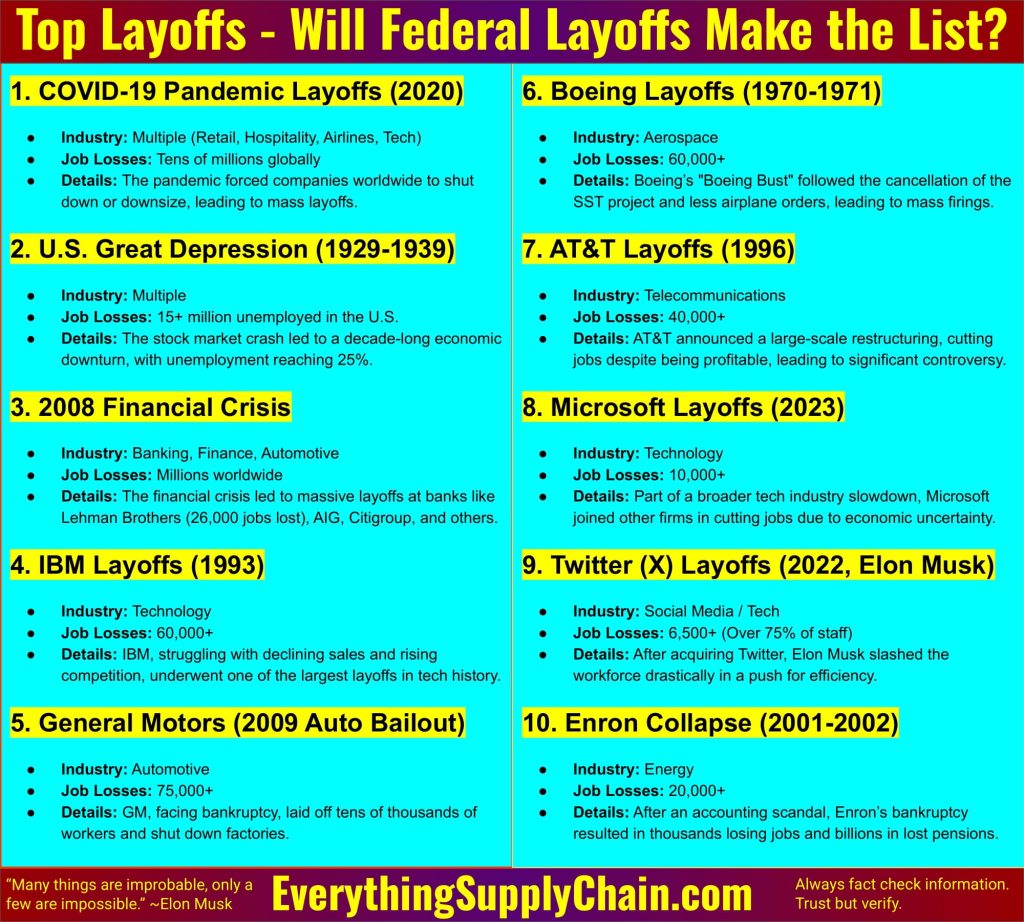
Top Layoffs of All Time – Will Federal Layoffs Make the List?
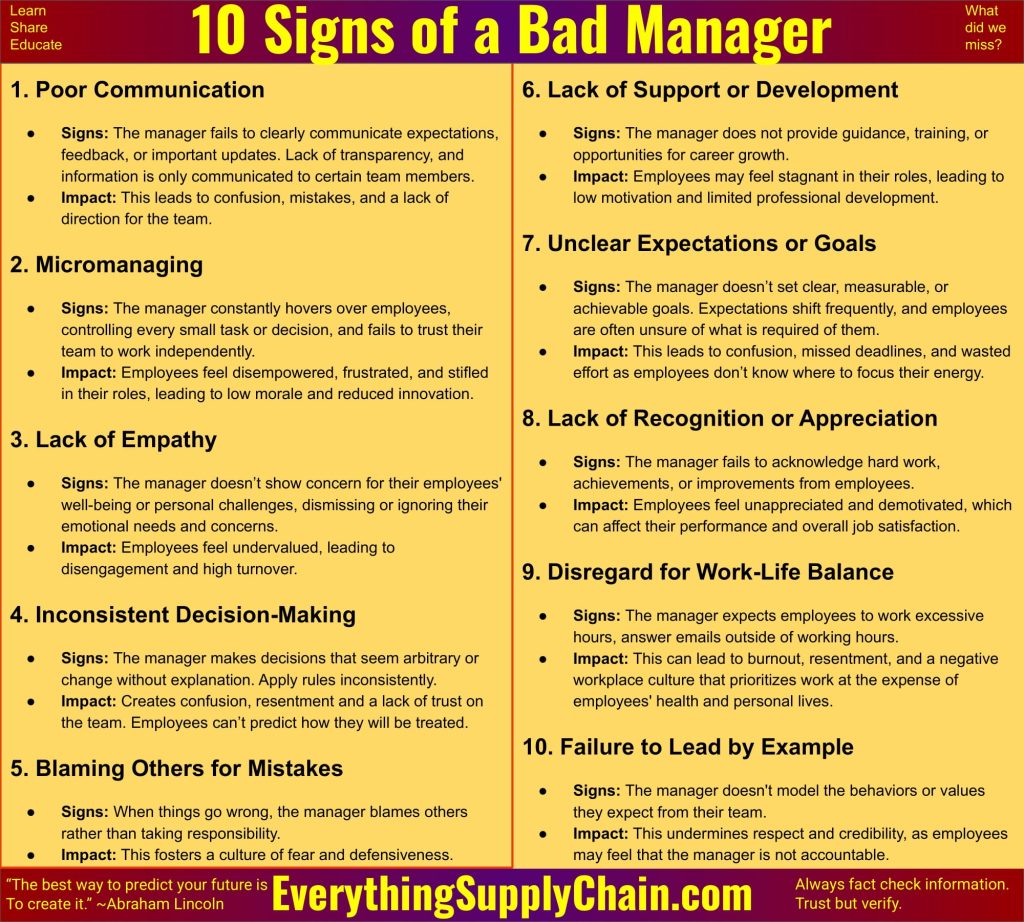
10 Signs of a Bad Manager.
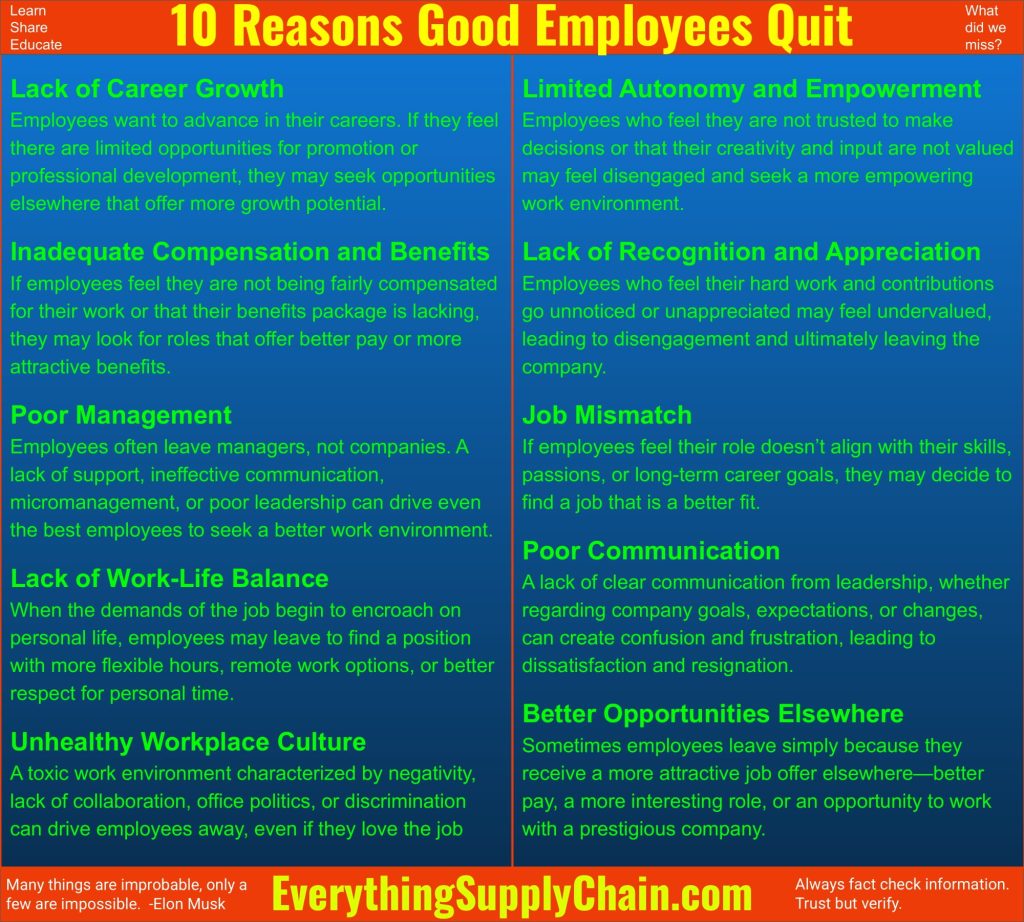
10 Reasons Good Employees Quit and How to Fix.
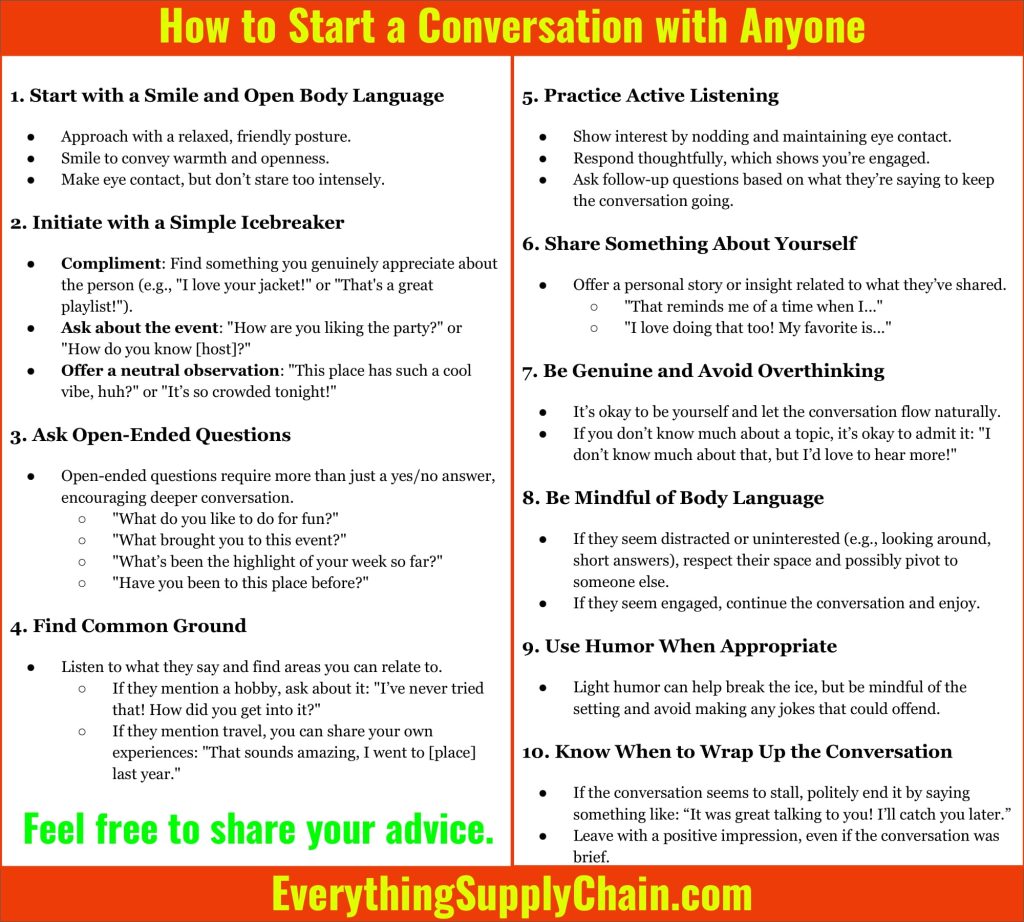
How to Start a Conversation with Anyone.
What are the Best Ways to get a job in Supply Chain?
