Best Practices in Retail and Ecommerce: How Modern Brands Win Customers (and Keep Them).
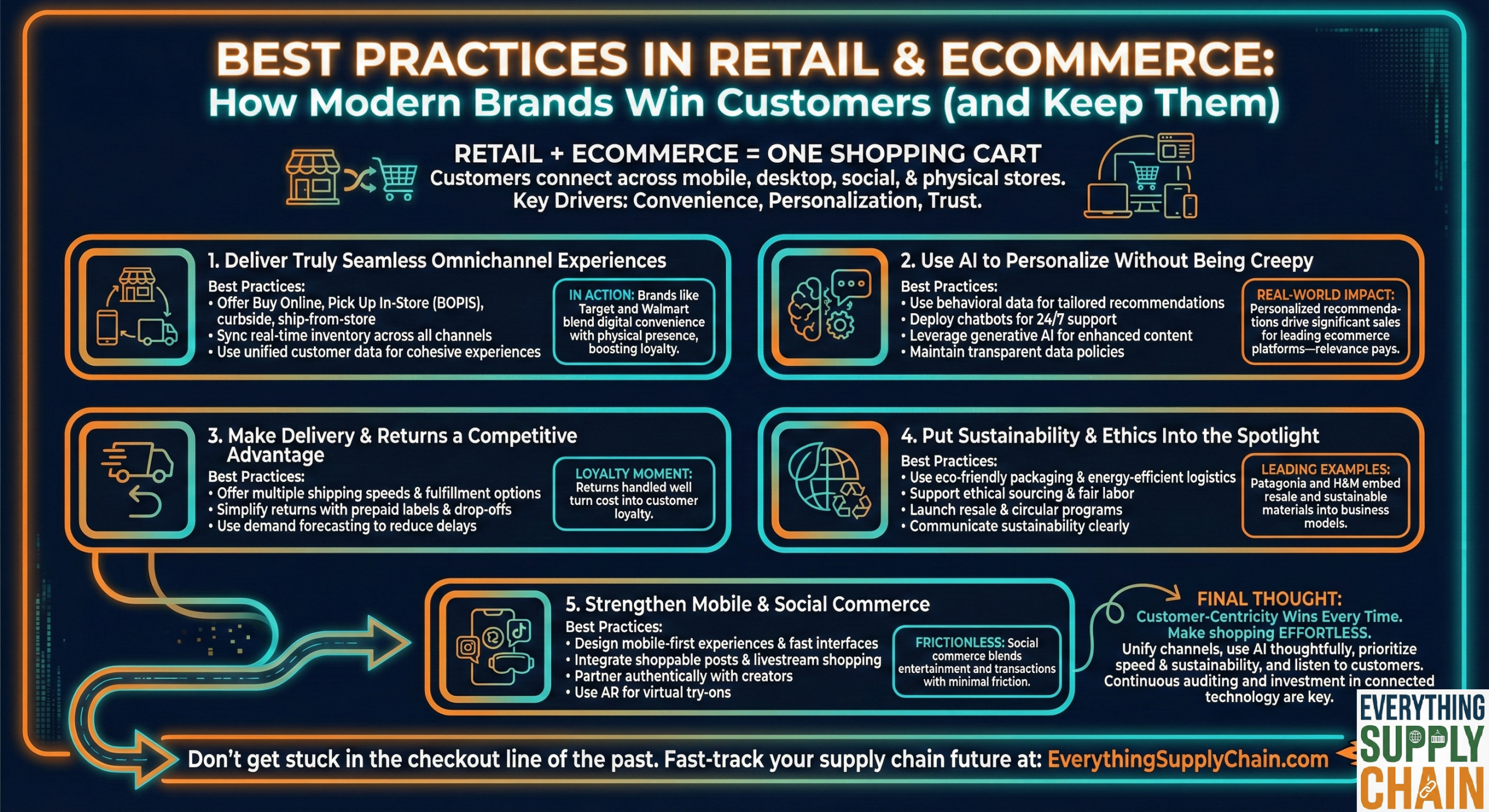
Retail and ecommerce are no longer separate worlds—they’re two sides of the same shopping cart. Digital sales now represent a significant share of total retail, and customers freely move between mobile, desktop, social platforms, and physical stores without thinking twice. What they do think about is convenience, personalization, and trust.
Today’s shoppers expect frictionless experiences, fast fulfillment, easy returns, and brands that align with their values. Free returns influence buying decisions for most consumers, while sustainability and ethical practices increasingly factor into where people choose to shop. In short, retail success now depends on how well brands connect the dots across channels.
This guide outlines proven best practices helping retail and ecommerce leaders stay competitive in an increasingly demanding marketplace.
1. Deliver Truly Seamless Omnichannel Experiences
Omnichannel retail isn’t a buzzword—it’s how people shop. Most customers interact with multiple touchpoints before making a purchase, and they expect consistency across all of them.
Best practices include:
- Offering Buy Online, Pick Up In-Store (BOPIS), curbside pickup, and ship-from-store
- Syncing real-time inventory across channels to avoid disappointment and lost sales
- Using unified customer data to create cohesive, personalized experiences
Retailers with mature omnichannel strategies consistently outperform single-channel competitors in engagement and loyalty.
In action: Brands like Target and Walmart blend digital convenience with physical presence exceptionally well.
2. Use AI to Personalize Without Being Creepy
AI has become a core driver of modern ecommerce—from product recommendations to dynamic pricing and predictive insights. Customers appreciate relevance, but only when it’s handled responsibly.
Best practices include:
- Using behavioral data to tailor recommendations and marketing messages
- Deploying chatbots for always-on customer support
- Leveraging generative AI to enhance product content and search experiences
- Maintaining transparent data policies to protect customer trust
Real-world impact: Personalized recommendations account for a significant portion of sales at leading ecommerce platforms—proof that relevance pays.
3. Make Delivery and Returns a Competitive Advantage
Fast, flexible delivery is no longer a perk—it’s expected. Shoppers abandon carts quickly when preferred delivery or return options aren’t available.
Best practices include:
- Offering multiple shipping speeds and fulfillment options
- Simplifying returns with prepaid labels and in-store drop-offs
- Using demand forecasting to reduce delivery costs and delays
Returns aren’t just a cost center—they’re a loyalty moment. Handle them well, and customers come back.
4. Put Sustainability and Ethics Into the Spotlight
Sustainability has moved from “nice to mention” to “expected.” Many shoppers actively consider a brand’s environmental and ethical practices before purchasing, and interest in resale and refurbished products continues to grow.
Best practices include:
- Using eco-friendly packaging and energy-efficient logistics
- Supporting ethical sourcing and fair labor practices
- Launching resale, recycling, or circular economy programs
- Communicating sustainability efforts clearly and honestly
Leading examples: Brands like Patagonia and H&M have embedded resale and sustainable materials into their business models—not just their marketing.
5. Strengthen Mobile and Social Commerce
Mobile devices and social platforms play a central role in how customers discover and buy products. Shopping is no longer confined to websites—it happens wherever attention lives.
Best practices include:
- Designing mobile-first experiences and fast-loading interfaces
- Integrating shoppable social posts and livestream shopping
- Partnering with creators and influencers authentically
- Using AR tools for virtual try-ons to reduce returns
Social commerce blends entertainment and transactions, turning browsing into buying with minimal friction.
Final Thought: Customer-Centricity Wins Every Time
Successful retail and ecommerce strategies revolve around one core principle: make shopping effortless. Brands that unify channels, apply AI thoughtfully, prioritize speed and sustainability, and listen closely to customers build loyalty that competitors can’t easily copy.
The strongest retailers continuously audit their experiences, invest in connected technology, and evolve alongside customer expectations.
Because in modern retail, the brands that win aren’t just easy to buy from—
they’re enjoyable to shop with, everywhere.
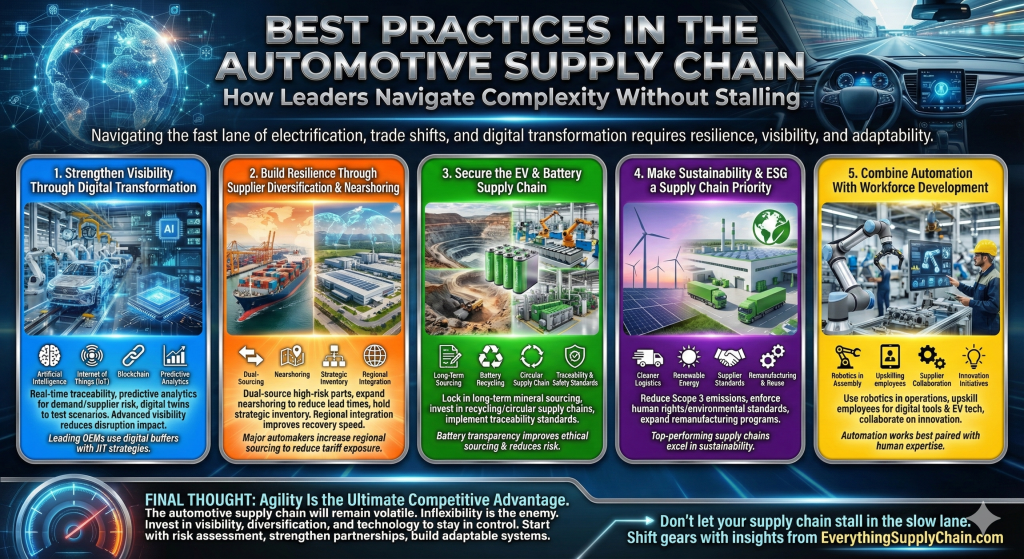
Best Practices in the Automotive Supply Chain: How Leaders Navigate Complexity Without Stalling
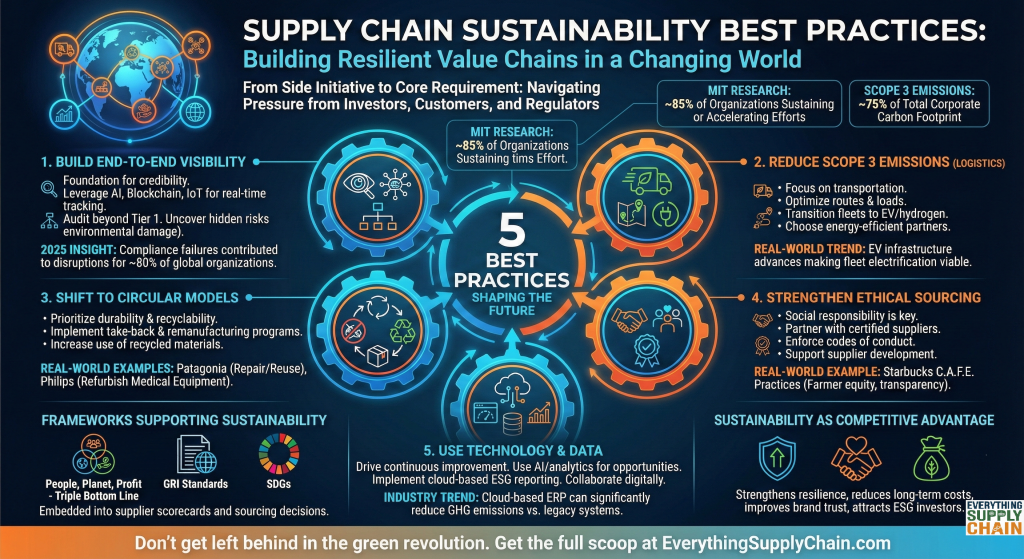
Supply Chain Sustainability Best Practices.

What Is Lean Manufacturing? (And Why “Doing More With Less” Is Still a Power Move)