What Is Lean Manufacturing? (And Why “Doing More With Less” Is Still a Power Move)

Lean Manufacturing has been around for decades, yet many people still think it means “working faster,” “cutting staff,” or “making everyone miserable in the name of efficiency.”
None of those are correct—and all of them miss the point.
Lean Manufacturing is about eliminating waste, improving flow, and creating value for the customer. When done right, it reduces cost, improves quality, and makes work easier—not harder.
What Is Lean Manufacturing
Lean Manufacturing is a systematic approach to producing goods using fewer resources, less time, and less waste, while still delivering what customers actually want.
In plain English:
Lean focuses on doing only the work that adds value—and removing everything that doesn’t.
That means:
- Making products customers need (not guessing and overproducing)
- Reducing unnecessary steps, delays, and rework
- Improving processes so problems are easier to spot and fix
Lean isn’t about cutting corners. It’s about cutting nonsense.
Where Lean Manufacturing Comes From
Lean Manufacturing traces its roots to the Toyota Production System (TPS). Toyota figured out that efficiency wasn’t about running machines nonstop—it was about flow, quality, and problem-solving.
The core idea was simple but powerful:
Waste hides problems. Remove waste, and problems reveal themselves.
And once you can see problems, you can fix them.
The Core Principles of Lean Manufacturing
Lean is built on a few foundational principles that guide decision-making across the factory floor.
1. Define Value from the Customer’s Perspective
If the customer wouldn’t pay for it, it’s probably not value-added.
2. Map the Value Stream
Identify every step in the process—and question why each one exists.
3. Create Flow
Work should move smoothly without bottlenecks, long waits, or unnecessary stops.
4. Establish Pull
Produce based on real demand, not forecasts fueled by optimism.
5. Pursue Continuous Improvement
Lean is not a one-time project. It’s a mindset of constant refinement.
The 8 Types of Waste (Yes, There Are More Than You Think)
Lean Manufacturing focuses on eliminating waste—known as “Muda.” There are eight classic forms:
- Overproduction – Making more than needed
- Waiting – Idle time between steps
- Transportation – Unnecessary movement of materials
- Overprocessing – Doing more work than required
- Inventory – Excess stock hiding problems
- Motion – Unnecessary movement of people
- Defects – Rework, scrap, and errors
- Unused Talent – Ignoring employee ideas and skills
Lean improves processes—and respects people. That last waste matters.
Key Lean Manufacturing Tools (Without the Jargon Overload)
Lean uses practical tools to identify problems and improve processes:
- 5S – Organize the workplace so issues are visible
- Kaizen – Continuous, incremental improvement
- Kanban – Visual systems to control workflow
- Standard Work – Best-known way to perform a task
- Value Stream Mapping – Visualizing waste and flow
These tools don’t fix problems by themselves—people do.
Lean Manufacturing vs. “Just Cutting Costs”
Lean often gets confused with cost-cutting. The difference is important.
Cost-cutting says:
“Do the same broken process cheaper.”
Lean says:
“Fix the process so cost naturally goes down.”
Lean improvements typically result in:
- Higher quality
- Shorter lead times
- Lower inventory
- Fewer firefighting moments
- Happier customers
And yes—lower costs, as a side effect.
Lean Manufacturing in the Real World
Lean isn’t limited to factories. It’s used in:
- Supply chain operations
- Warehousing and distribution
- Healthcare and hospitals
- Software development
- Service industries
Anywhere there’s a process, there’s waste—and Lean can help remove it.
Common Myths About Lean Manufacturing
- “Lean means layoffs.”
Poor leadership causes layoffs. Lean exposes inefficiencies. - “Lean only works in automotive.”
Lean works anywhere people do repeatable work. - “We’re already lean.”
Everyone thinks that—until they map the process.
Final Thought: Lean Is a Mindset, Not a Project
Lean Manufacturing isn’t a checklist, certification, or poster on the wall. It’s a way of thinking about work, value, and improvement.
When organizations truly embrace Lean, they stop asking:
“Who messed this up?”
And start asking:
“Why did the system allow this to happen?”
That shift changes everything.
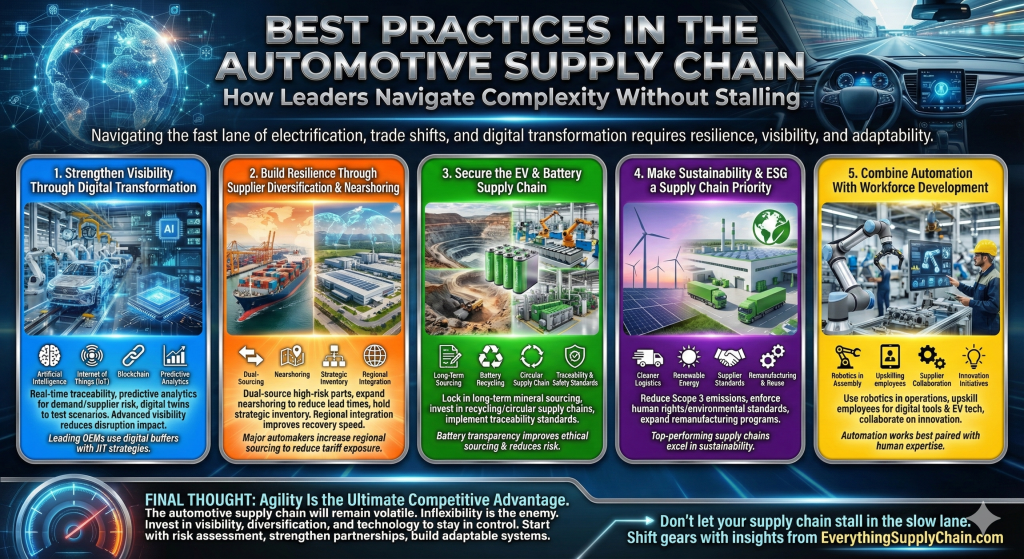
Best Practices in the Automotive Supply Chain: How Leaders Navigate Complexity Without Stalling
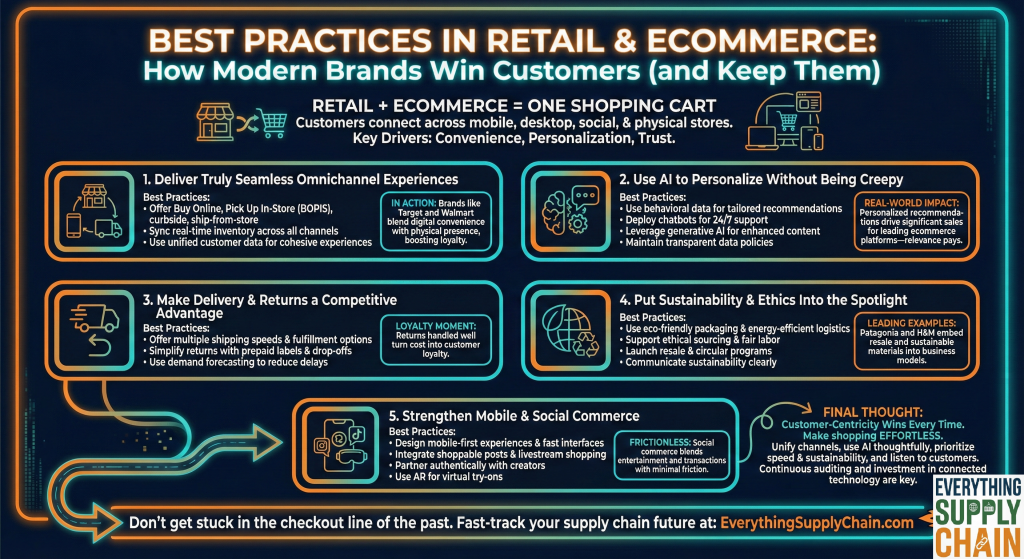
Best Practices in Retail and Ecommerce: How Modern Brands Win Customers (and Keep Them).
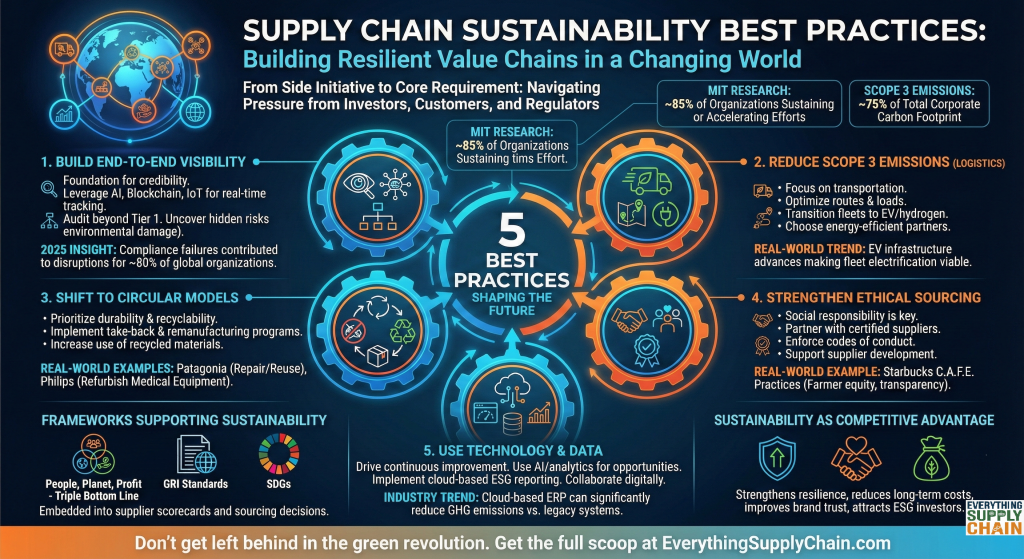
Supply Chain Sustainability Best Practices.