Supply Chain Sustainability: Saving the Planet without Breaking the Supply Chain.
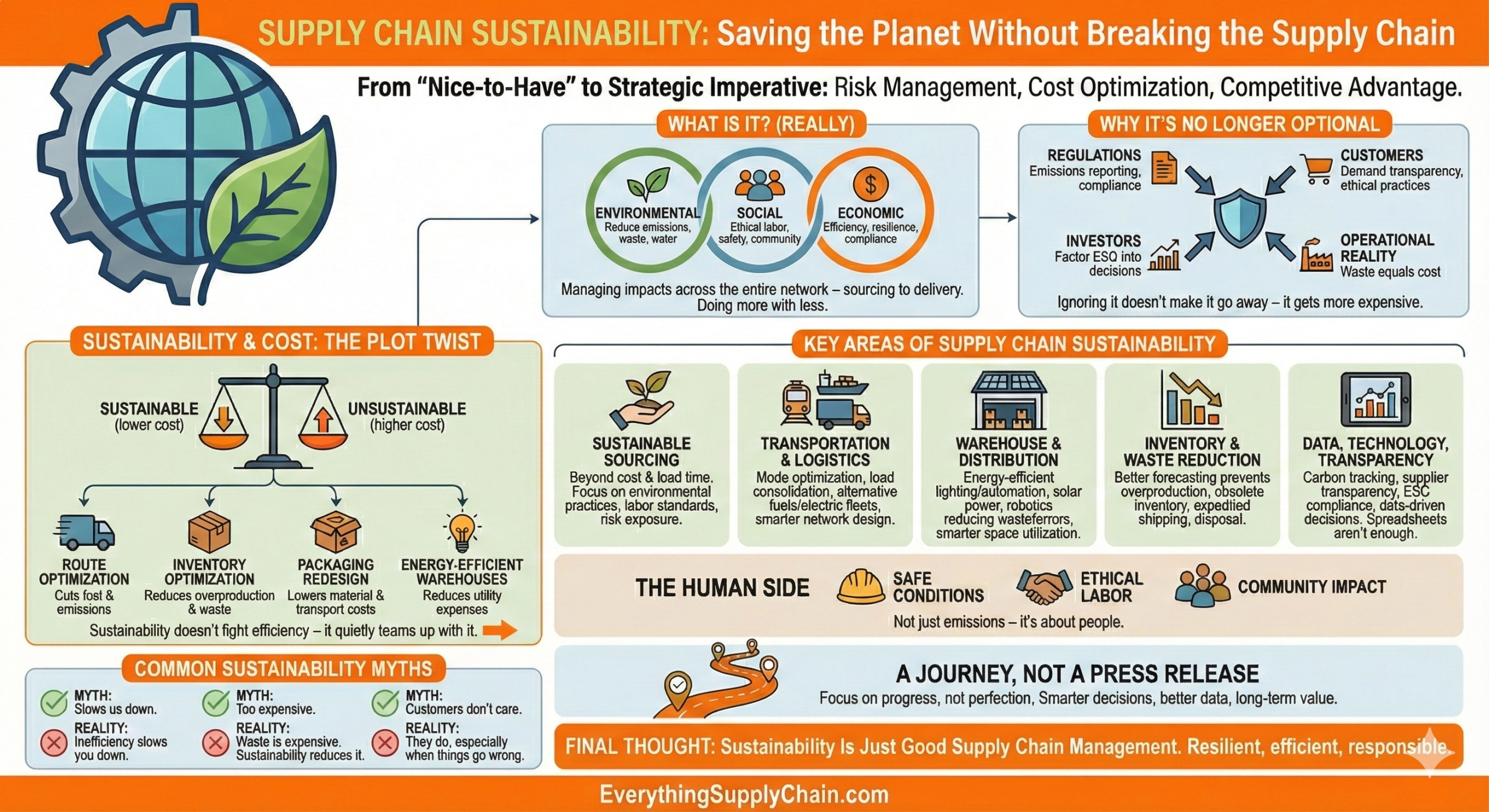
Supply chain sustainability used to be treated like a “nice-to-have”—something discussed in annual reports, sustainability slides, and conference panels, but rarely embedded into day-to-day operations. Today, that mindset is obsolete.
Sustainability is no longer a branding exercise. It’s a risk management strategy, cost optimization lever, and competitive advantage—all rolled into one. And despite popular belief, sustainable supply chains don’t require hugging trees in the warehouse (though morale might improve).
What Is Supply Chain Sustainability (Really)?
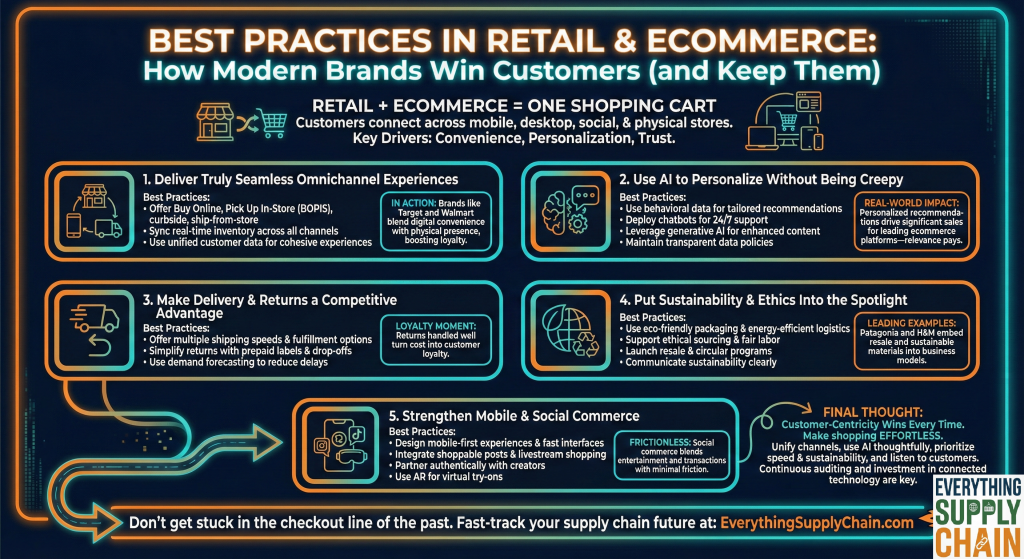
Supply chain sustainability focuses on managing environmental, social, and economic impacts across the entire supply network—from raw material sourcing to final delivery.
This includes:
- Reducing carbon emissions and waste
- Improving labor and ethical sourcing practices
- Designing resilient, efficient operations
- Meeting regulatory and customer expectations
In short, sustainability is about doing more with less—without cutting corners that matter.
Why Supply Chain Sustainability Is No Longer Optional
Between climate events, geopolitical disruptions, and increasingly informed customers, unsustainable supply chains are becoming expensive liabilities.
Organizations face pressure from:
- Regulations requiring emissions reporting and compliance
- Customers demanding transparency and ethical practices
- Investors factoring ESG performance into decisions
- Operational reality where waste equals cost
Ignoring sustainability doesn’t make it go away—it just makes it more expensive later.
Sustainability and Cost: The Plot Twist
Here’s the part that surprises many executives: sustainable supply chains are often cheaper.
Examples include:
- Route optimization that cuts fuel costs and emissions
- Inventory optimization that reduces overproduction and waste
- Packaging redesign that lowers material and transportation costs
- Energy-efficient warehouses that reduce utility expenses
Sustainability doesn’t fight efficiency—it quietly teams up with it.
Key Areas of Supply Chain Sustainability
1. Sustainable Sourcing
This involves selecting suppliers based not only on cost and lead time, but also on environmental practices, labor standards, and risk exposure.
Translation: the cheapest supplier isn’t cheap if they shut down, get sanctioned, or damage your brand.
2. Transportation and Logistics Emissions
Transportation is one of the largest contributors to supply chain emissions.
Sustainable strategies include:
- Mode optimization (rail vs. truck vs. air)
- Load consolidation
- Alternative fuels and electric fleets
- Smarter network design
Less fuel burned = lower cost and fewer headaches.
3. Warehouse and Distribution Sustainability
Modern warehouses are becoming sustainability powerhouses—sometimes literally.
Key initiatives include:
- Energy-efficient lighting and automation
- Solar-powered facilities
- Robotics that reduce waste and errors
- Smarter space utilization
A sustainable warehouse isn’t slower—it’s smarter.
4. Inventory and Waste Reduction
Excess inventory isn’t just bad for cash flow—it’s bad for the planet.
Overproduction leads to:
- Obsolete inventory
- Expedited shipping
- Disposal and write-offs
Better forecasting and inventory strategies reduce waste, cost, and panic.
5. Data, Technology, and Transparency
You can’t manage what you can’t measure—and sustainability is no exception.
Technology enables:
- Carbon tracking and reporting
- Supplier transparency
- ESG compliance
- Data-driven decision-making
Spreadsheets may be nostalgic, but they are not a sustainability strategy.
The Human Side of Sustainable Supply Chains
Sustainability isn’t just about emissions and materials—it’s about people.
This includes:
- Safe working conditions
- Ethical labor practices
- Supplier accountability
- Community impact
A supply chain that looks good on paper but fails people will eventually fail the business.
Common Sustainability Myths (Let’s Clear These Up)
- “Sustainability slows us down.”
Inefficiency slows you down. Sustainability exposes it. - “It’s too expensive.”
Waste is expensive. Sustainability reduces it. - “Customers don’t really care.”
They do—especially when something goes wrong.
Sustainability Is a Journey, Not a Press Release
The most successful companies don’t chase perfection—they focus on progress. They start with what they can control, measure results, and continuously improve.
Sustainable supply chains aren’t built overnight. They’re built through smarter decisions, better data, and leadership that understands long-term value over short-term optics.
Final Thought: Sustainability Is Just Good Supply Chain Management
At its core, supply chain sustainability is about resilience, efficiency, and responsibility. It’s not about being trendy—it’s about being prepared.
Because in today’s world, the most sustainable supply chains aren’t just better for the planet.
They’re better for business.