Supply Chain Sustainability Best Practices.
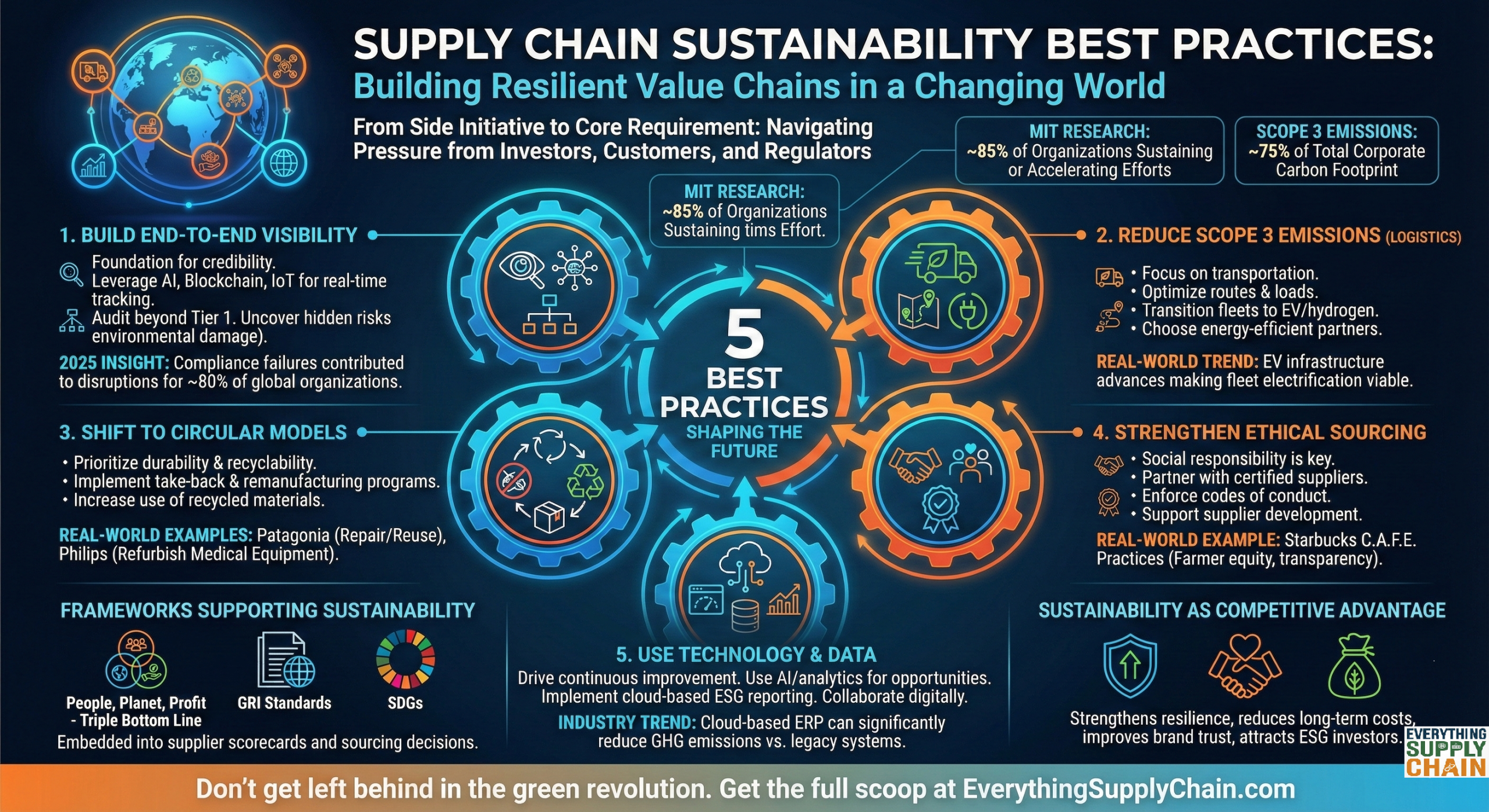
Supply chain sustainability is no longer treated as a side initiative or marketing checkbox. It has become a core business requirement. Research from MIT shows that roughly 85% of organizations are sustaining or accelerating their sustainability efforts, even amid economic uncertainty and shifting regulatory landscapes.
Pressure is coming from every direction—investors want ESG accountability, customers expect ethical practices, and regulators are tightening reporting requirements. With Scope 3 emissions accounting for nearly three-quarters of total corporate carbon footprints, supply chains are now the primary arena where meaningful sustainability progress happens.
A sustainable supply chain balances environmental stewardship, social responsibility, and long-term economic performance. Below are the most effective best practices shaping supply chain sustainability today, supported by real-world trends and proven examples.
1. Build End-to-End Supply Chain Visibility
Transparency across multi-tier supply networks is the foundation of any credible sustainability strategy. New mandates—such as the EU’s Corporate Sustainability Reporting Directive (CSRD)—are forcing companies to document supplier practices in greater detail starting in 2025.
Best practices include:
- Leveraging AI, blockchain, and IoT for real-time tracking
- Performing ongoing supplier audits and ESG risk evaluations
- Expanding visibility beyond Tier 1 suppliers to uncover hidden risks like forced labor, environmental damage, or regulatory exposure
2025 Insight: Sustainability-related compliance failures contributed to operational disruptions for nearly 80% of global organizations, underscoring the cost of poor visibility.
2. Reduce Scope 3 Emissions Through Smarter Logistics
Indirect emissions—especially from transportation and distribution—represent one of the largest sustainability challenges. Decarbonization efforts must focus on logistics optimization and partner alignment.
Best practices include:
- Improving route planning and load utilization
- Transitioning fleets to electric, hydrogen, or alternative-fuel vehicles
- Selecting warehouses and logistics partners with strong energy-efficiency performance
In practice: Advances in EV infrastructure are making fleet electrification increasingly viable for both regional and long-haul operations.
3. Shift Toward Circular Supply Chain Models
Linear supply chains built on “take, make, dispose” are giving way to circular models that prioritize reuse, refurbishment, and recycling.
Best practices include:
- Designing products for durability and recyclability
- Reducing waste through take-back and remanufacturing programs
- Increasing the use of recycled and renewable materials
Real-world examples: Patagonia emphasizes repair and reuse to extend product life, while Philips refurbishes medical equipment to reduce emissions and material waste.
4. Strengthen Ethical Sourcing and Social Impact
Environmental sustainability cannot exist without social responsibility. Ethical sourcing ensures that labor practices, human rights, and community impacts are addressed throughout the supply chain.
Best practices include:
- Partnering with certified and responsibly audited suppliers
- Enforcing supplier codes of conduct with regular verification
- Supporting supplier development rather than immediate replacement
Example: Starbucks achieves full ethical sourcing through its C.A.F.E. Practices, which focus on farmer equity, transparency, and environmental stewardship.
5. Use Technology and Data to Drive Continuous Improvement
Sustainability efforts scale only when supported by reliable data and modern systems. Digital transformation enables organizations to move from estimates to measurable action.
Best practices include:
- Using AI and analytics to identify efficiency and emissions-reduction opportunities
- Implementing cloud-based platforms for accurate ESG and carbon reporting
- Collaborating digitally with suppliers on shared sustainability targets
Industry trend: Cloud-based ERP systems can significantly reduce greenhouse gas emissions compared to legacy on-premise infrastructure.
Frameworks That Support Sustainable Supply Chains
Many organizations anchor their strategies using established sustainability frameworks, including:
- Triple Bottom Line (People, Planet, Profit)
- Global Reporting Initiative (GRI) Standards
- United Nations Sustainable Development Goals (SDGs)
These frameworks are increasingly embedded into supplier scorecards, sourcing decisions, and capital investment strategies.
Sustainability Is Now a Competitive Advantage
In 2025, supply chain sustainability delivers far more than environmental benefits. It strengthens resilience, reduces long-term costs, improves brand trust, and attracts ESG-focused investors. Consumers are actively shifting spending toward companies that demonstrate ethical and transparent supply chain practices.
The most successful organizations start pragmatically—by assessing current supply chains, setting measurable goals, and collaborating closely with partners. As MIT research continues to show, execution matters more than intention.
By applying these best practices, companies can reduce risk, create measurable impact, and position themselves for long-term success in an increasingly sustainability-driven economy.
The question isn’t whether to act—it’s what step you’ll take next.
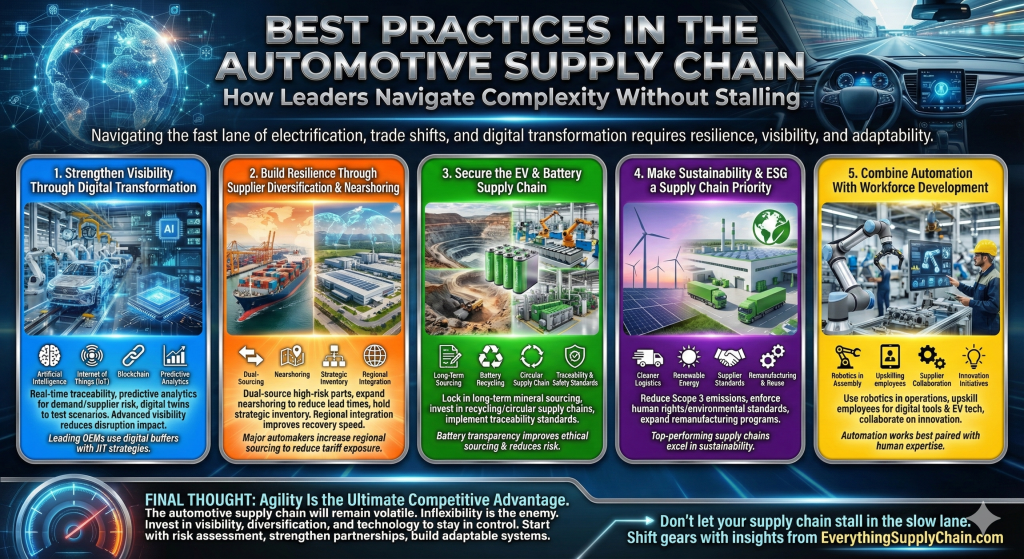
Best Practices in the Automotive Supply Chain: How Leaders Navigate Complexity Without Stalling
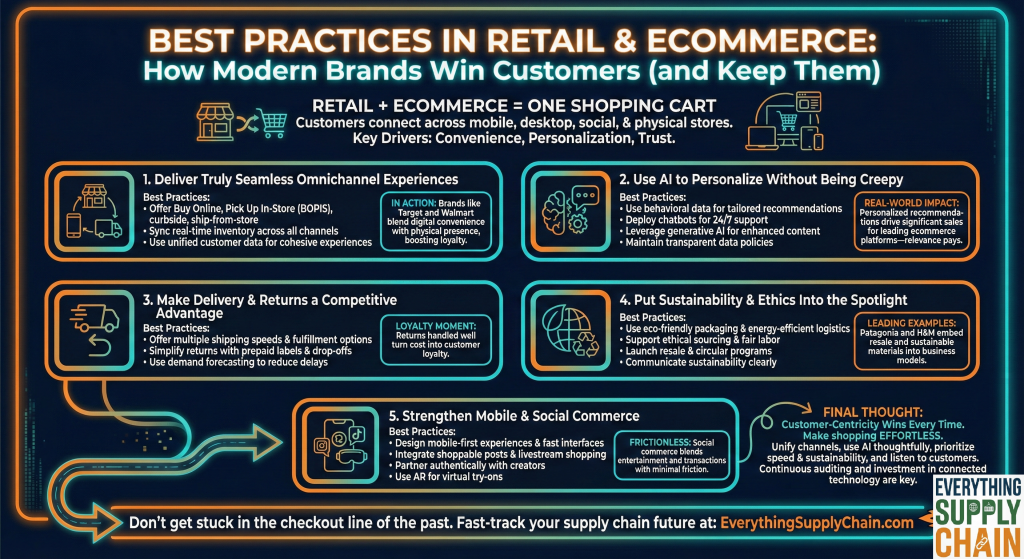
Best Practices in Retail and Ecommerce: How Modern Brands Win Customers (and Keep Them).
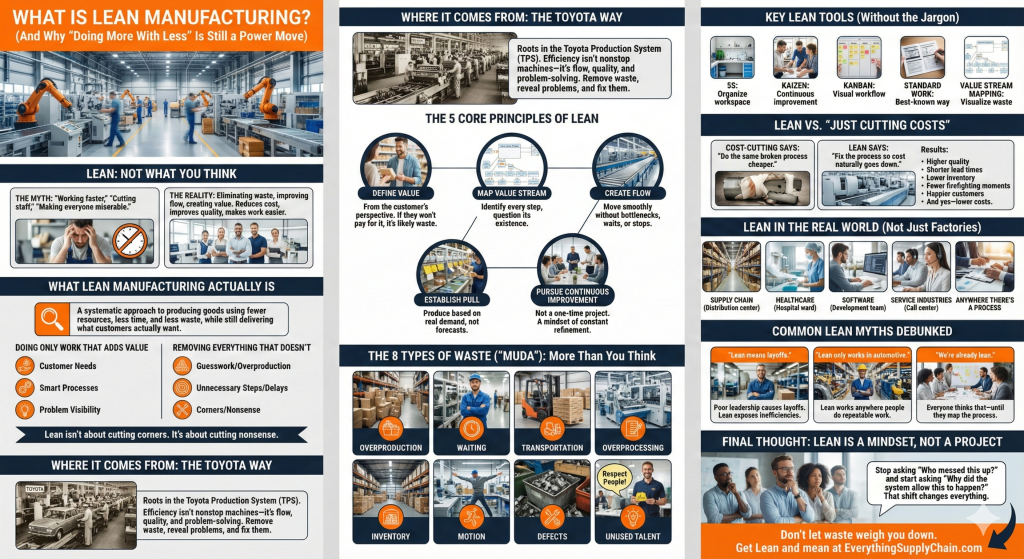
What Is Lean Manufacturing? (And Why “Doing More With Less” Is Still a Power Move)